

Sports Injury Rehab
What is the F.A.S.T Technique & How Does It Help?
Many people believe the best treatment for a sprained ankle is complete rest, but prolonged inactivity can actually slow the healing process. Extended rest can lead to muscle atrophy, joint weakness, reduced mobility, and lingering instability, making recovery more difficult.
Dr. Michael Shimmel and Dick Hartzell developed the F.A.S.T. (Flexband Ankle Strengthening and Traction) technique as an innovative approach to ankle sprain rehabilitation. This specialized method combines both active and passive ankle joint movement to encourage healing while restoring normal function.
The F.A.S.T. technique is based on the principle that controlled movement promotes recovery. By introducing safe motion early in the rehabilitation process, the ankle can regain its range of motion, strength, balance, and stability more efficiently. Rather than relying on prolonged rest, F.A.S.T. helps patients recover stronger and return to walking, running, sports, and everyday activities with greater confidence.
Rethinking the R.I.C.E Technique
Dr. Gabe Mirkin, who created the RICE method (Rest, Ice, Compression, Elevation) in 1978, later changed his opinion about icing injuries. He explains that while ice can reduce pain and swelling, it may also slow the healing process by reducing blood flow and limiting inflammation that the body needs to repair damaged tissue. He now believes ice should mainly be used for short-term pain relief rather than as a way to speed up recovery.
Ankle Injury Rehabilitation
Your ankles are the foundation of nearly every movement you make. Whether you've suffered a sprain while playing sports, exercising, or simply stepping the wrong way, proper rehabilitation is essential for a full recovery. At Stow-Kent Chiropractic Clinic, we focus on restoring normal ankle function—not just relieving pain. Our rehabilitation programs are designed to improve mobility, rebuild strength, enhance stability, and help reduce the risk of future ankle injuries, so you can get back to the activities you enjoy with confidence.
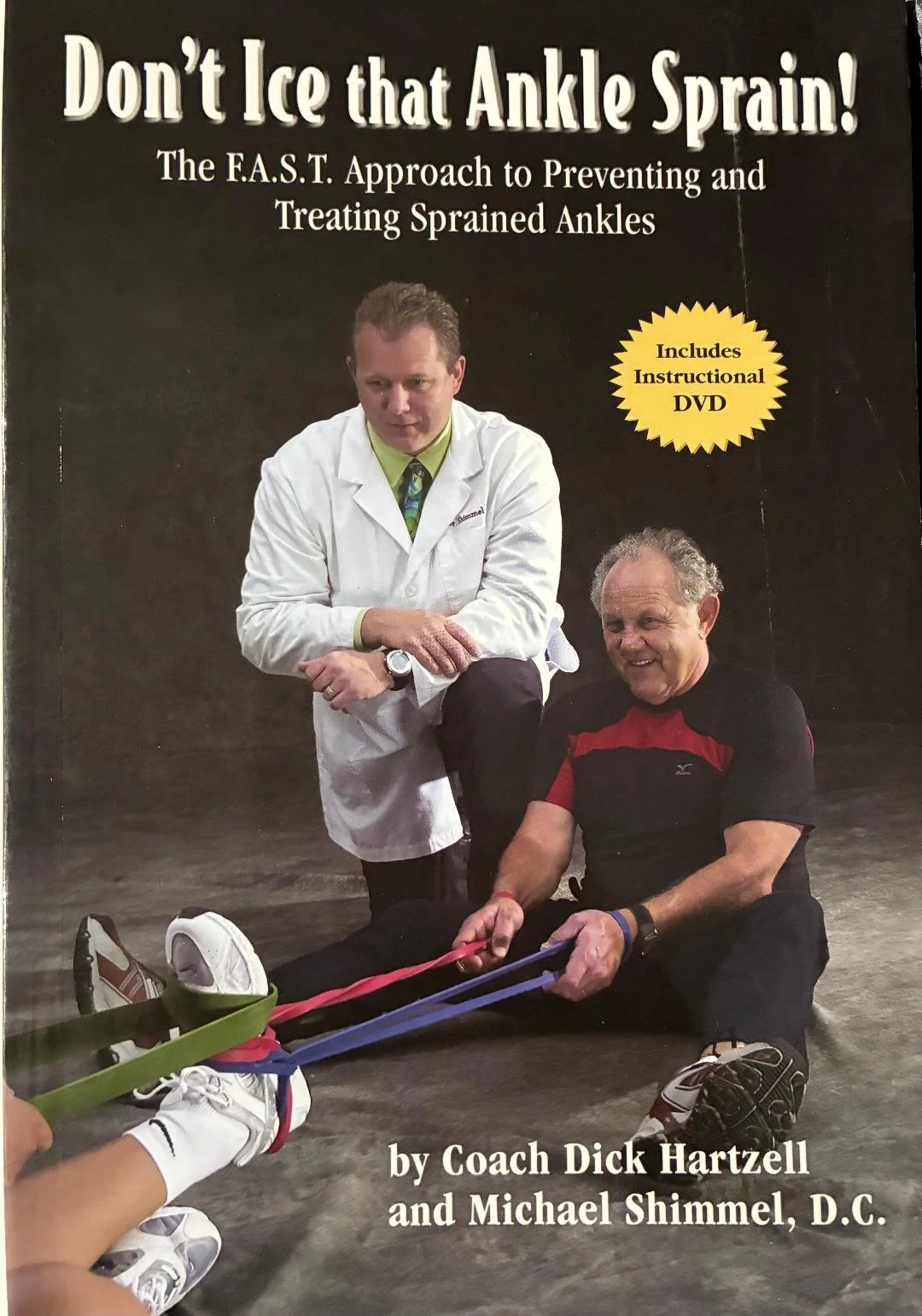
F.A.S.T Technique: Real Athletes, Real Results
Many schools have used the F.A.S.T. technique to help their athletes recover from ankle injuries faster than expected. Dave Deville, who was an assistant coach at Leetonia High School in 2001, shared an example involving Steve, a senior athlete at the time. After Steve twisted his ankle, Dave used traction as part of the F.A.S.T. technique. Steve was then able to walk around and noticed an immediate improvement. His response was, “Coach, I’ve had a lot of different things done to my ankles when I’ve hurt them, but never anything that has made them feel this good.” His experience is one example of how the F.A.S.T. technique can help improve ankle function and support the healing process.
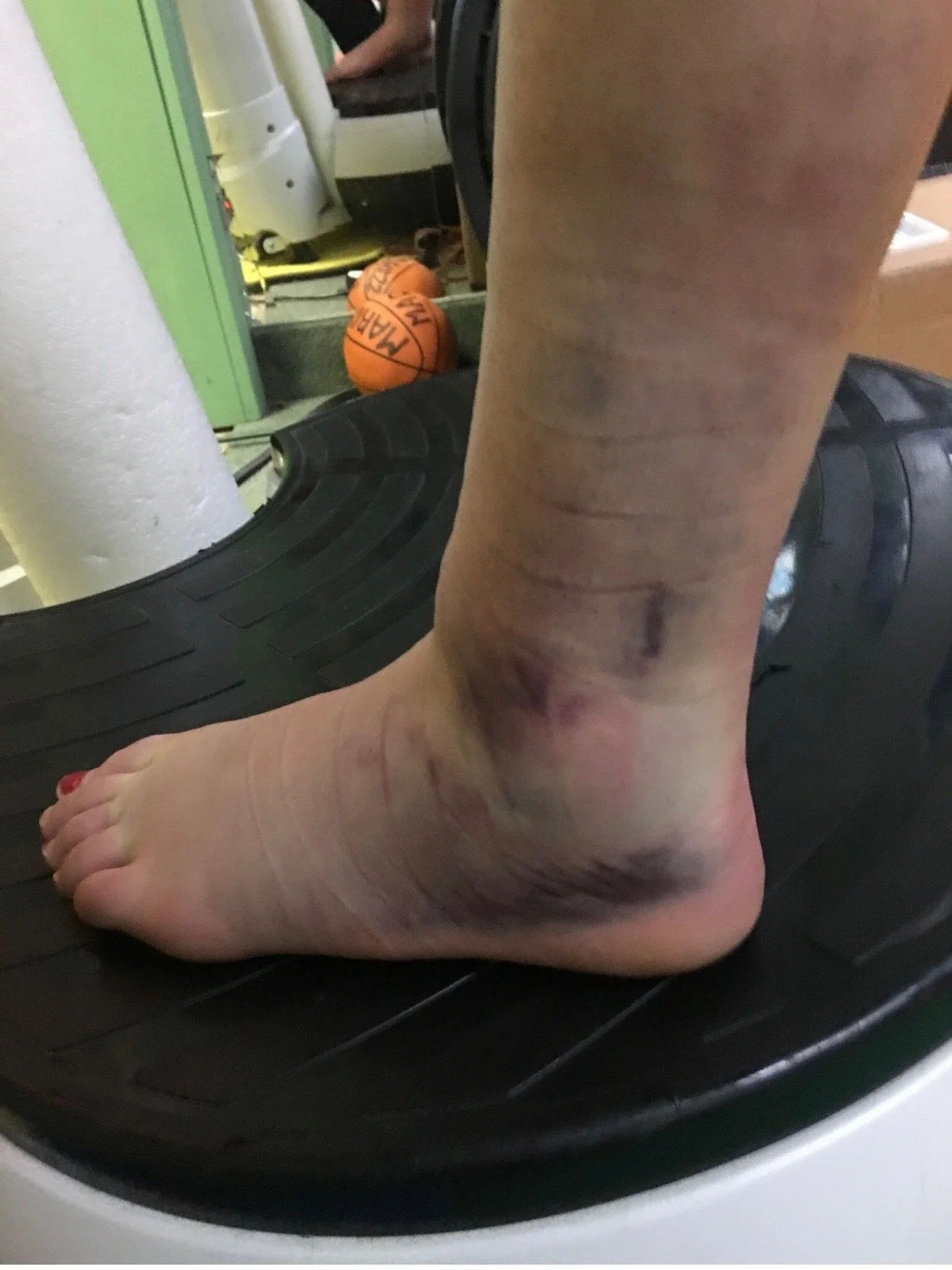
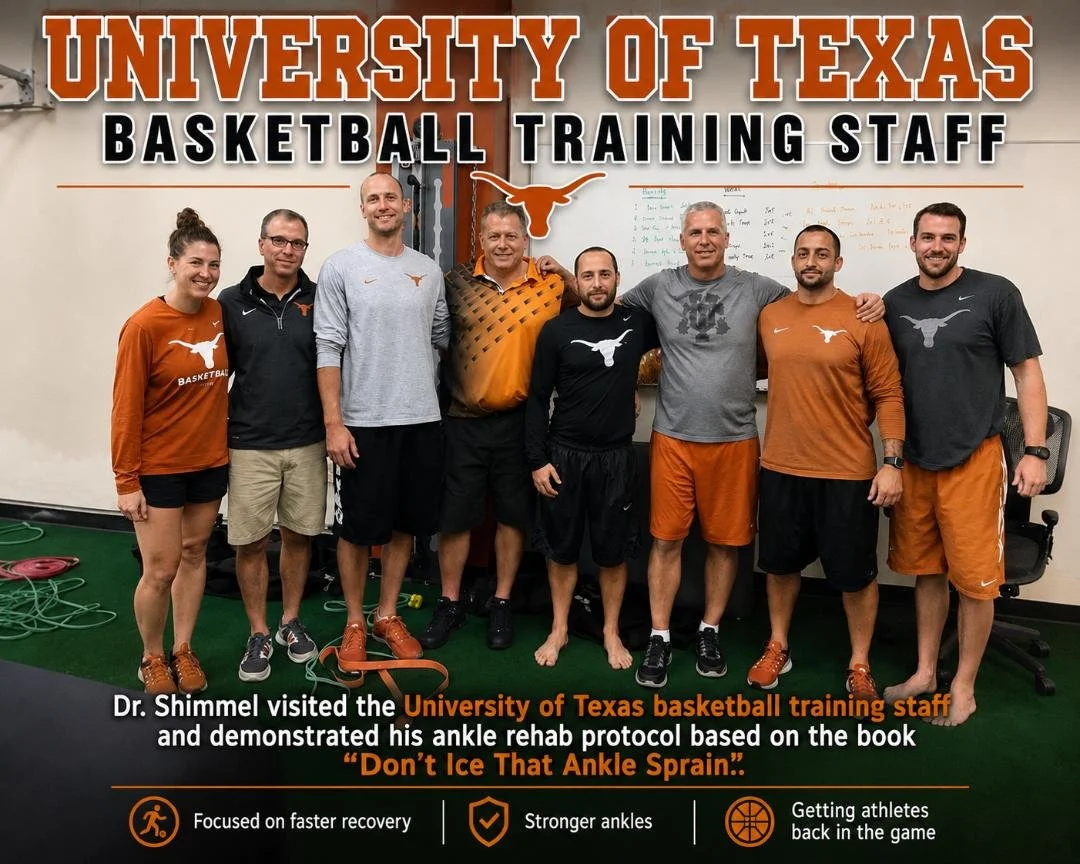
The picture shows the ankle of a girl who injured it while during a basketball game. When she came into the clinic she thought it was going to keep her out for long term time, however that was not the case. After two weeks of going through the sports rehabiliation program at the clinic, she was back to return to play within only a two week time span wearing a protective brace.
The Science Behind F.A.S.T Traction
Both of these videos explain the process of tractioning the ankle with reasoning behind the how and why as well as tractioning the ankle works to improve the healing process.
But it’s not just the ankles…it’s the Whole Body
It’s not just ankles that we can treat with our injury rehabilitation program. We’ve had patients with knee, shoulder, upper back, lower back, and neck injuries go through the program and leave feeling better. Each part of the body requires its own approach to help the healing process occur.
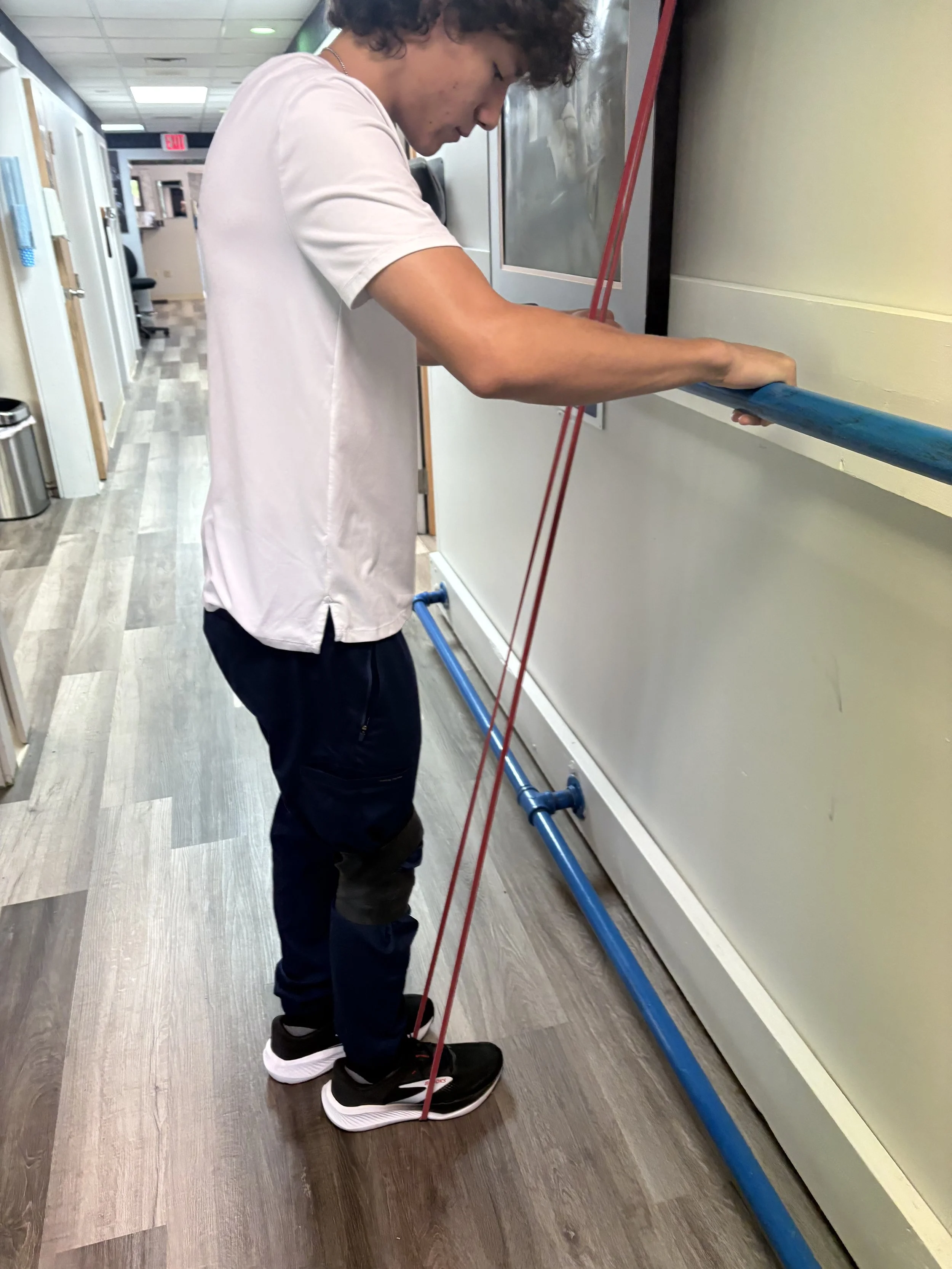
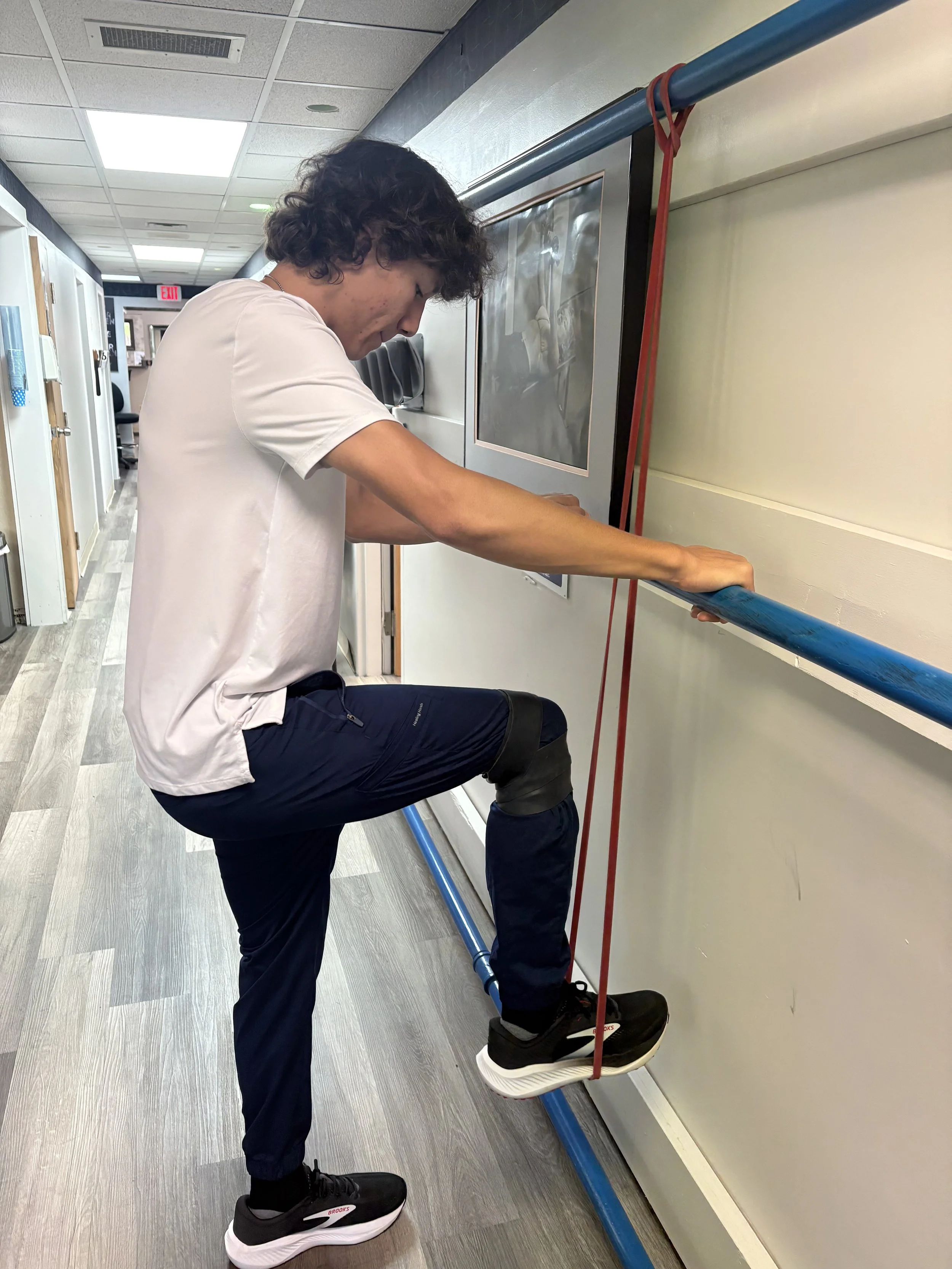
For example, knee injuries may use step-down exercises, with or without compression, to strengthen the knee without causing pain around the kneecap. Patients may also perform knee flexion and extension exercises to help improve range of motion.
The pictures on the right show step-downs with a compression band around the knee.
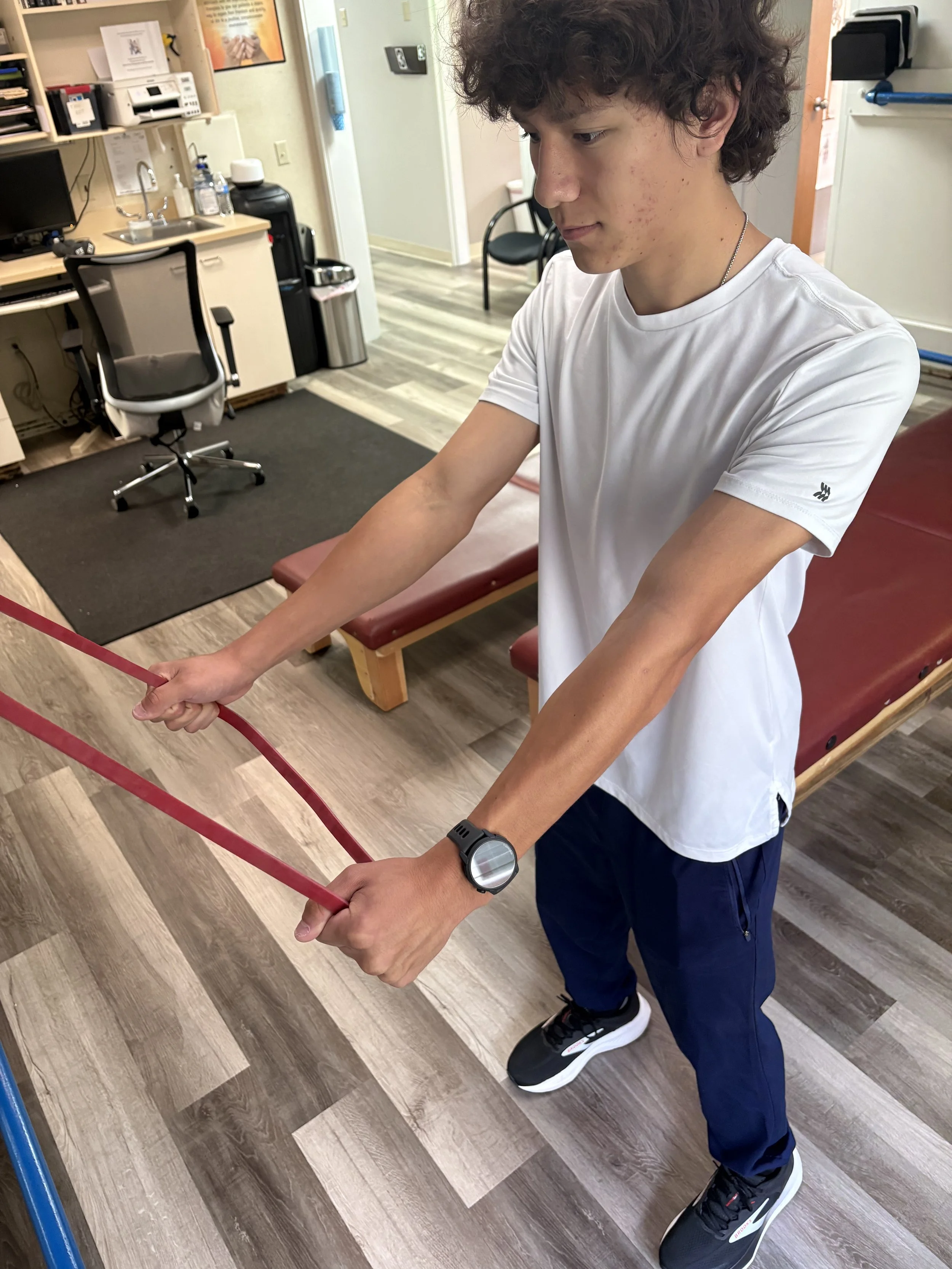
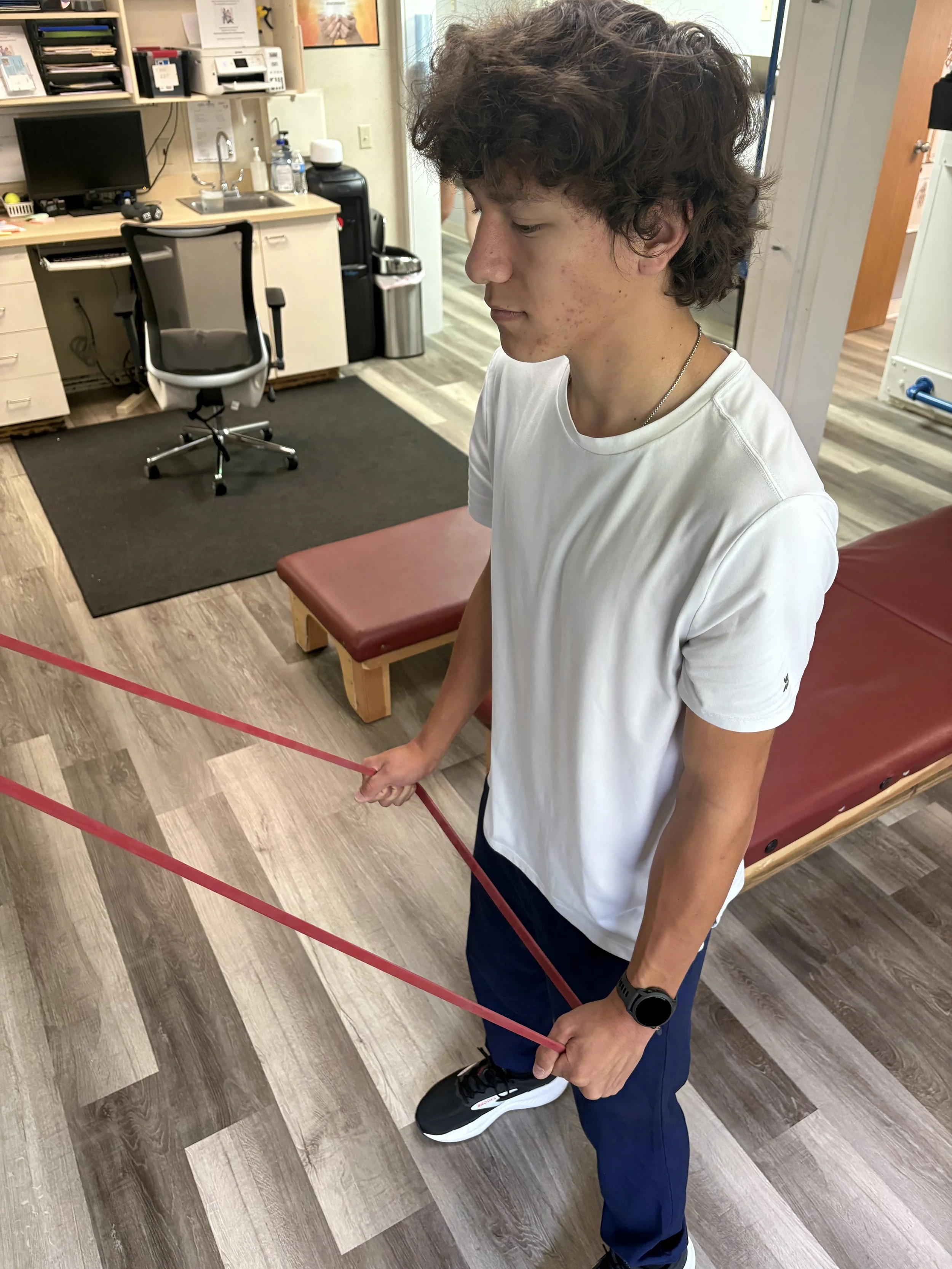
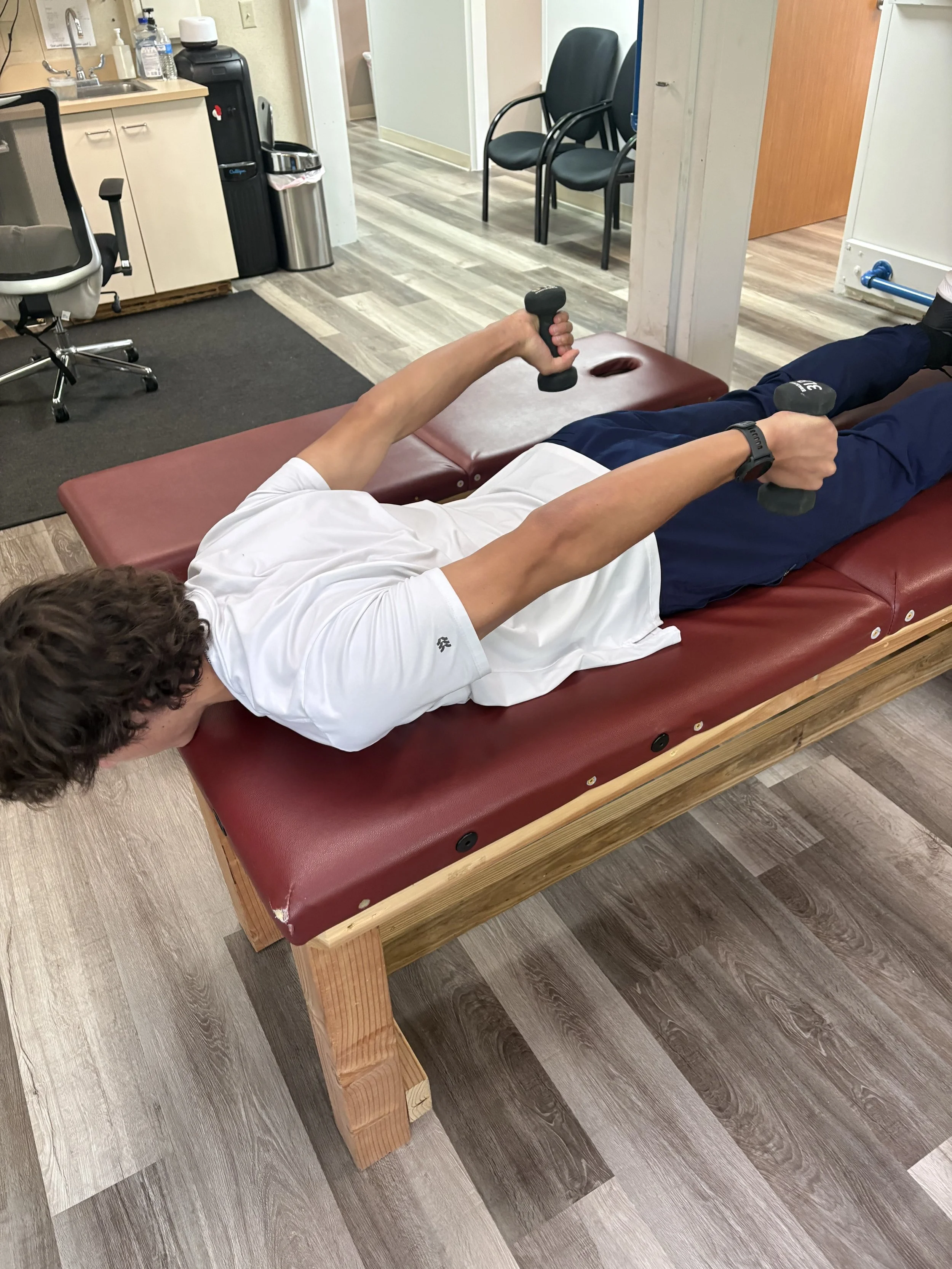
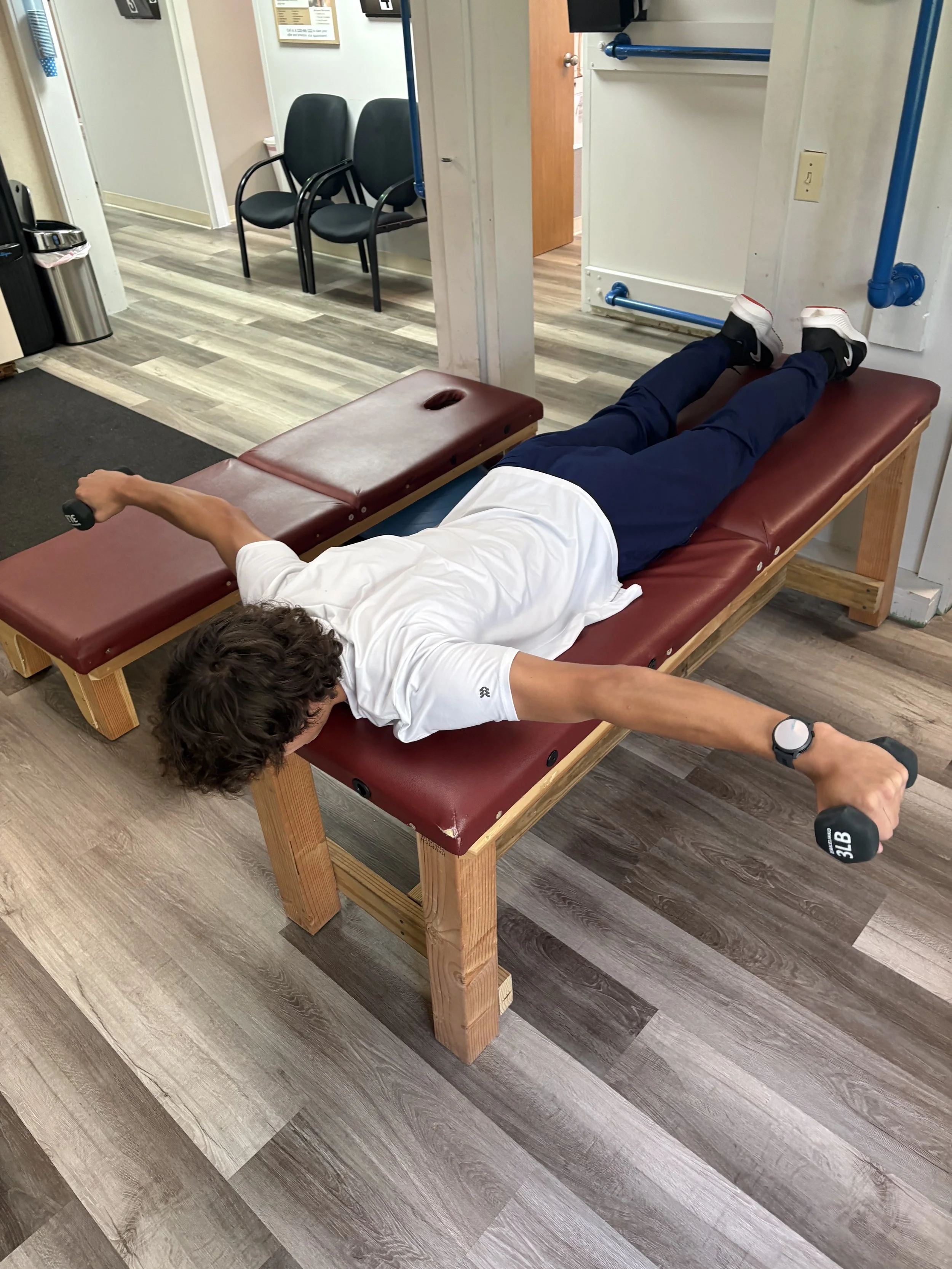
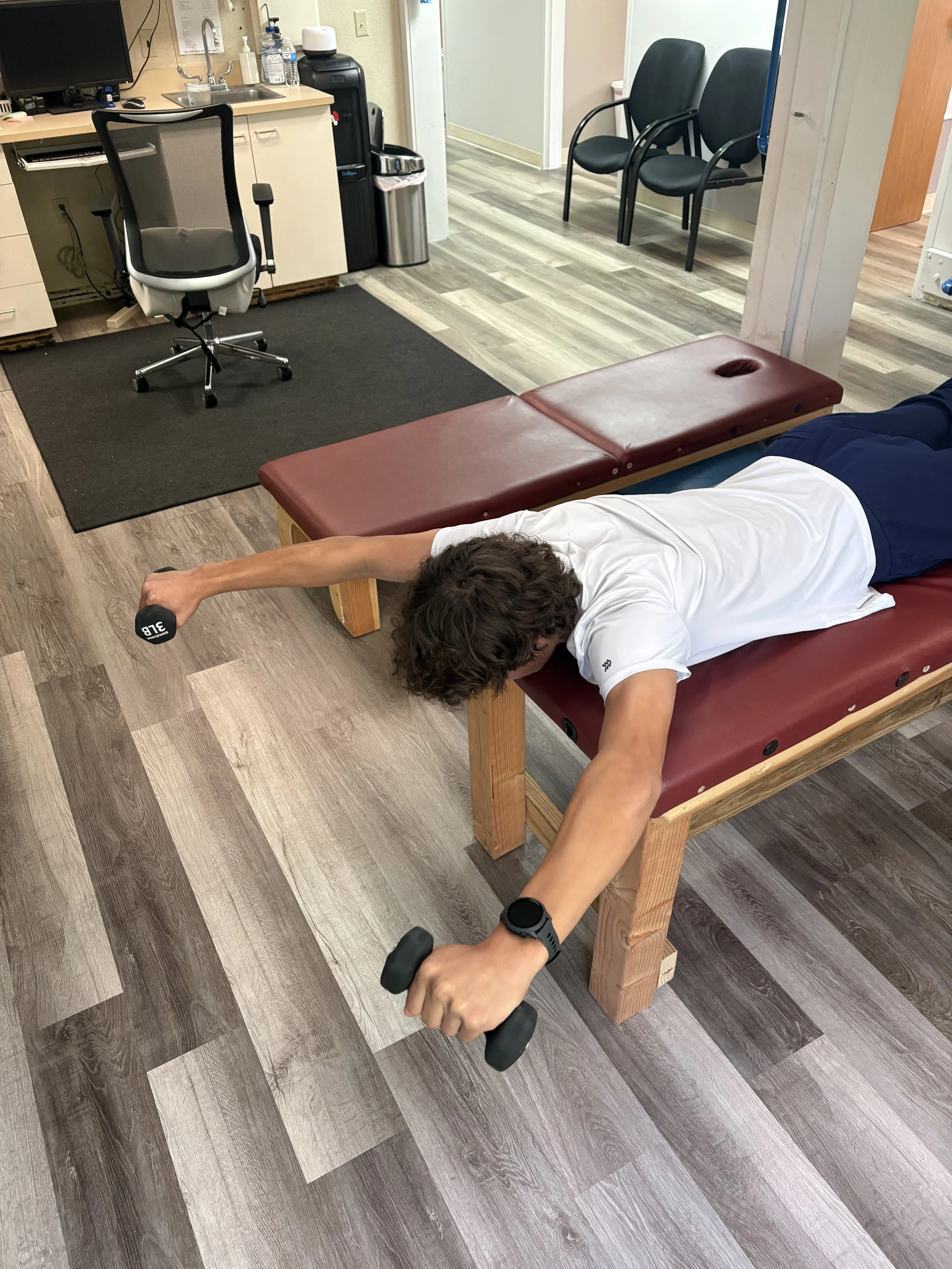
Shoulder injuries will go through a series of stretches and exercises designed to improve mobility and strengthen the joint and surrounding muscles. Some of these exercises include Codman’s Swings, ATY’s, and Around the Worlds.
The pictures on the left show the ATY exercise.
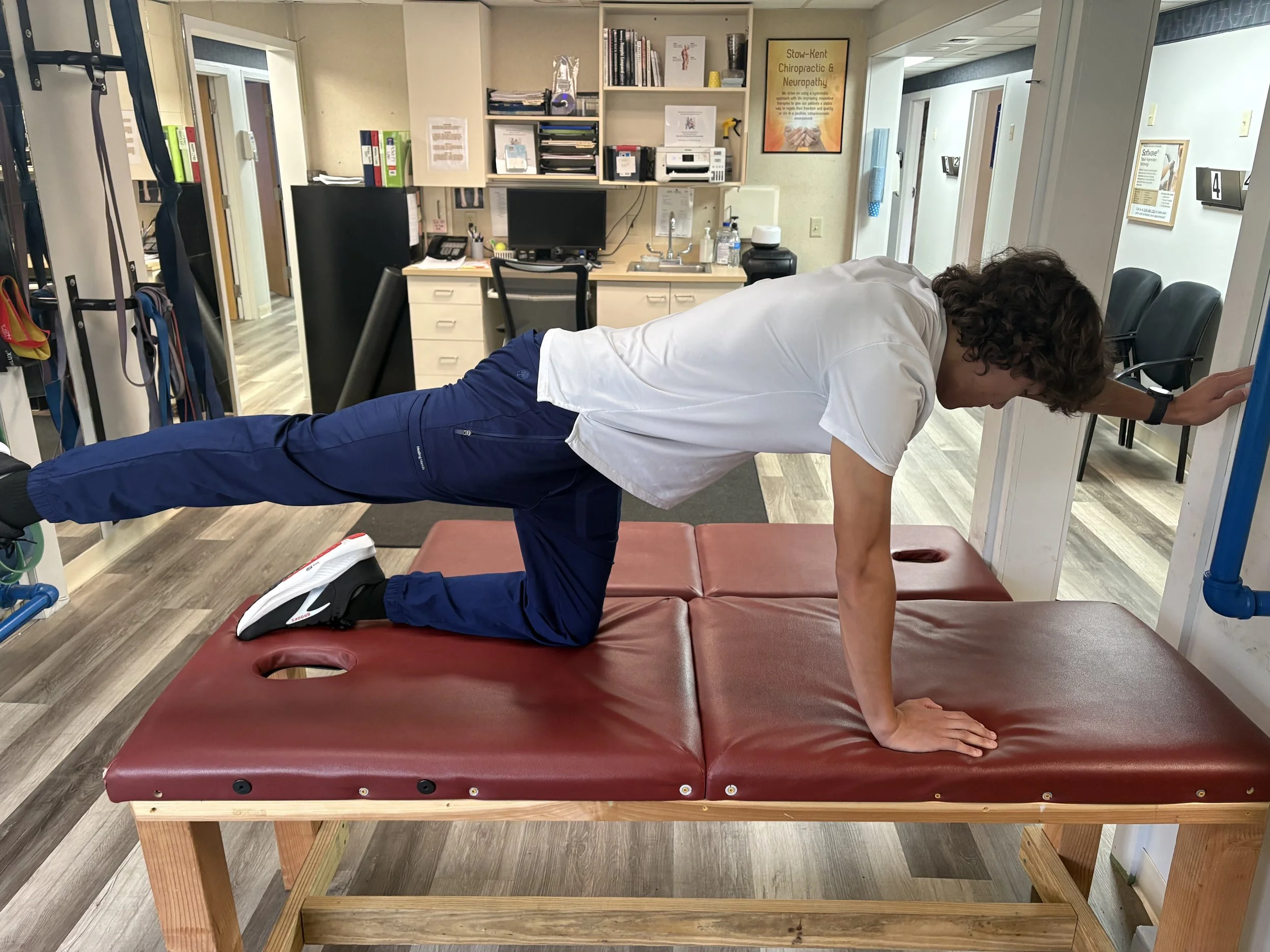
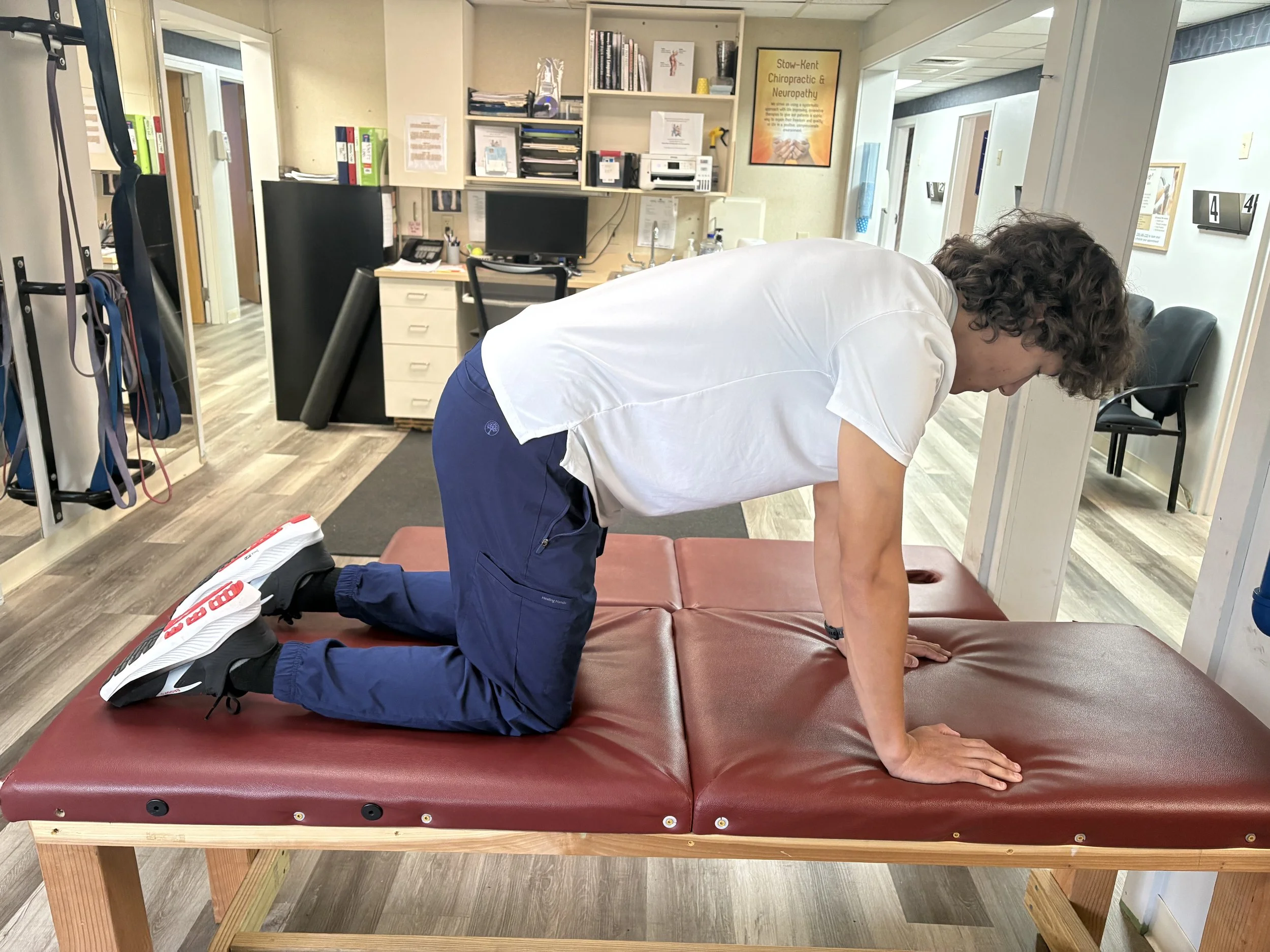
Lower back injuries can vary greatly because there are many different types of lower back pain. Treatment may focus on areas ranging from the glutes to sciatic pain, so stretching, mobility, and strengthening exercises may all be used together.
The pictures on the right show a Bird Dog exercise.
The upper back protocol will often involve the neck as well. Neck pain can radiate down into the upper back, just as upper back pain can radiate up into the neck.
The picture on the left shows Lat Pulldowns, while the video on the right shows Square Shrugs.